| 1. | National Constitution Center |
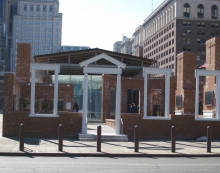
| |  Visit Web Site5th & Arch Streets 866.917.1787 | The National Constitution Center, located on Philadelphia's Independence Mall, is the first museum in the world devoted to dramatically telling the story of The United States Constitution from Revolutionary times to the present through more than 100 interactive and multimedia exhibits, film, photographs, text, sculpture and artifacts. Be sure to walk through Signers’ Hall with its life-size statues including Benjamin Franklin and George Washington. Watch Freedom Rising which brings to life the historical context of The Constitution and its impact on our lives today. Take the Presidential Oath-of-Office and vote for your favorite President of all-time. |
 |
| 2. | Independence Visitor Center |
| |  Visit Web Site1 N. Independence Mall West at 6th & Market Streets (across from the Liberty Bell) 800.537.7676 | Visitors to the Independence Visitor Center will discover a range of services and amenities that provide a warm welcome and all of the information you need to plan your visit to the Philadelphia area including Independence National Historical Park. Get your free timed tour tickets for Independence Hall on the morning of your visit, on a first-come, first-served basis. Throughout the day, you can watch two films: Independence and Choosing Sides. Visit the Independence Store for souvenirs and Old Capital Coffee for refreshments. |
 |
| 3. | The Liberty Bell Center |
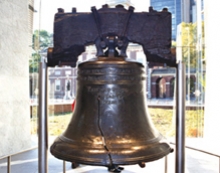
| |  Visit Web Site6th Street between Market & Chestnut Streets (across from the Visitor Center) 215.597.8974 | As the official bell of the Pennsylvania State House, which is today called Independence Hall, the Liberty Bell rang many times for public announcements. It may have rung on July 8, 1776 to announce the first public reading of The Declaration of Independence. The Liberty Bell, which weighs about 2,000 pounds, was silenced by a crack in 1846. Its inscription reads: "Proclaim Liberty throughout all the Land unto all the Inhabitants thereof" - Leviticus XXV, v.10, The Bible. The new Liberty Bell Center features exciting exhibits on the history of this world-famous icon of freedom. |
 |
| 4. | Independence Hall |
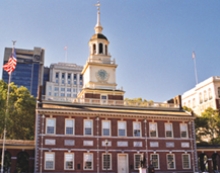
| |  Visit Web SiteChestnut Street between 5th & 6th Streets 215.597.8974 | Independence Hall, the birthplace of America, was built in 1732 as the Pennsylvania State House. Within this hallowed hall, the Second Continental Congress met in May 1775, and The Declaration of Independence was adopted on July 4, 1776. Independence Hall is also where the Constitutional Convention met to draft, debate and then sign The United States Constitution on September 17, 1787.
Note: Every visitor to Independence Hall will need a free timed ticket, which you can get at the Independence Visitor Center on the morning of your visit, on a first-come, first-served basis. To reserve your tickets in advance for a small processing fee, call 800.967.2283 or log onto http://reservations.nps.gov. |
 |
| 5. | Congress Hall |
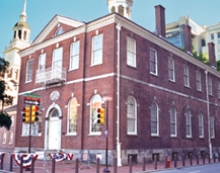
| |  Visit Web SiteChestnut Street between 5th & 6th Streets 215.597.8974 | Constructed between 1787 and 1789 as the Philadelphia County Court House, Congress Hall served as the United States Capitol, the meeting place of the United States Congress, from 1790 to 1800, when Philadelphia was the Capital of the United States. The House of Representatives met on the main floor, while the Senate assembled upstairs. From its earliest days the Senate thus came to be referred to as the "upper chamber." Among the historic events that took place here were the inaugurations of President George Washington (his second) and President John Adams. |
 |
| 6. | Old City Hall |
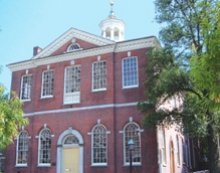
| |  Visit Web SiteChestnut Street between 5th & 6th Streets 215.597.8974 | The United States Supreme Court met here from 1791 until 1800 when the Capital of the United States was moved from Philadelphia to Washington, D.C. Early members of the Supreme Court included: John Jay, Chief Justice, 1789 to 1795; Oliver Ellsworth, Chief Justice, 1796 to 1800; and John Marshall, Associate Justice who later became Chief Justice, 1801 to 1835. |
 |
| 7. | Philosophical Hall |
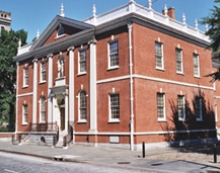
| |  Visit Web Site104 South Fifth Street between Chestnut and Walnut Streets 215.440.3400 | The American Philosophical Society was founded in 1743 as a home for thinkers about nature, machines, industry and governance. It was founded through the outgrowth of an idea fostered by Benjamin Franklin, and it is the oldest learned society in the United States. Today, the Society continues as an eminent scholarly organization of world-wide reputation, renowned for its excellence in scholarly research and publications, its library, its exhibitions and its international roster of elected members who make up a veritable “Who’s Who” of outstanding individuals in the arts, humanities and the sciences. The Museum in Philosophical Hall presents exhibitions and programs based on the Society’s rich collection of art and artifacts. The museum is free and open to the public.
|
 |
| 8. | Tomb of the Unknown Soldier |
| |  Visit Web SiteWashington Square, bounded by 6th & 7th Streets and Walnut Street 215.597.8974 | The Tomb of the Unknown Soldier lies within Washington Square, one of the five public parks drawn up by William Penn in his 1682 blueprint for Philadelphia. In 1954, the Washington Square Planning Committee decided to erect a memorial that honored both George Washington and an unknown soldier from the Revolutionary War. |
 |
| 9. | Library Hall |
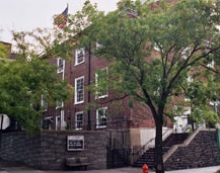
| |  Visit Web Site105 South 5th Street (entrance on Library Street) 215.440.3400 | The Library Company of Philadelphia, founded by Benjamin Franklin in 1731, was housed on the site of Library Hall from 1790 to 1880; the Library Company served as the Library of Congress from 1774 to 1800. In the 1880s, the Library Company moved to 1314 Locust Street, and the original Library Hall was then demolished. In the 1950s, a reproduction of Library Hall was constructed on its original site. Today, Library Hall houses some of the American Philosophical Society’s collections, and the Library Company still functions as a prominent research library on Locust Street. |
 |
| 10. | Second Bank of the United States |
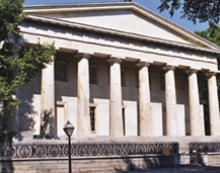
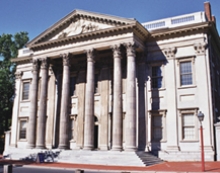
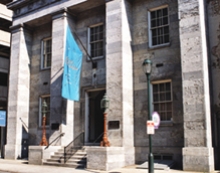
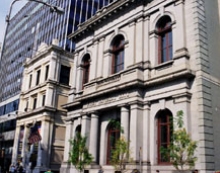
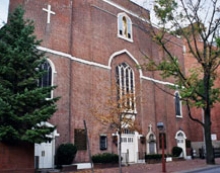
| |  Visit Web Site420 Chestnut Street 215.597.8974 | Completed in 1824, the Second Bank of the United States is one of the finest examples of Greek Revival architecture, modeled on the Parthenon in Greece. The Second Bank was designed by William Strickland who was known as the "city architect" because he created a large number of Philadelphia’s public buildings. The Second Bank was incorporated in 1816, and it was one of the most influential financial institutions in the world until 1832. Today, the building houses a collection of late 18th and early 19th Century portraits. |
 |
| 11. | Todd House |
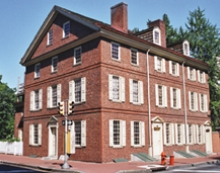
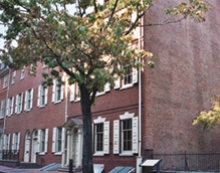
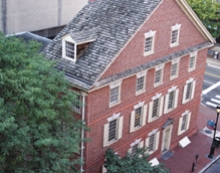
| |  Visit Web Site4th & Walnut Streets 800.537.7676 | Built in 1775, the Todd House was occupied from 1791 to 1793 by lawyer John Todd, and his wife Dolley Payne. Todd died during the 1793 yellow fever epidemic. Following her husband’s death, Dolley married James Madison, who later became the fourth President of the United States.
Note: The Todd House is open by tour only. Free tickets are available on the day of your visit at the Independence Visitor Center. Tours are limited to 10 people, and tickets are distributed on a first-come, first-served basis. The tour takes approximately one hour and includes the Bishop White House. |
 |
| 12. | Bishop White House |
| |  Visit Web Site309 Walnut Street 800.537.7676 | The Reverend Dr. William White, rector of Christ Church and St. Peter’s Church as well as the first Episcopal Bishop of Pennsylvania, lived in this house from the time it was built in 1787 until his death in 1836.
Note: The Bishop White House is open by tour only. Free tickets are available on the day of your visit at the Independence Visitor Center. Tours are limited to 10 people, and tickets are distributed on a first-come, first-served basis. The tour takes approximately one hour and includes the Todd House. |
 |
| 13. | Polish American Cultural Center Museum |
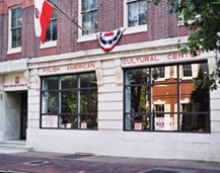
| |  Visit Web Site308 Walnut Street 215.922.1700 | The Polish American Cultural Center Museum features exhibits on Polish history and culture, including a pictorial display of "Great Men and Women of Poland." Some of the notable people featured in the exhibit from Colonial and Revolutionary times are Thaddeus Kosciuszko, one of the 18th Century's greatest champions of American and Polish freedom, and Casimir Pulaski, "Father of the American Cavalry." |
 |
| 14. | Merchants' Exchange |
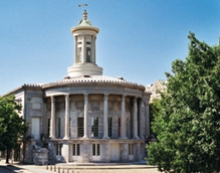
| |  Visit Web Site3rd Street at Walnut Street 215.597.8974 | The Merchants’ Exchange, designed by William Strickland in 1831, is the oldest stock exchange building in the United States. During President Andrew Jackson’s first term in office, Philadelphia, along with the rest of America, was in the midst of an economic boom, and the building was a hub for financial and commercial activities. |
 |
| 15. | City Tavern |
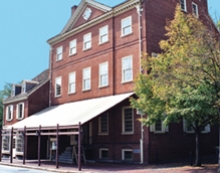
| |  Visit Web Site138 South Second Street between Walnut and Chestnut Streets 215.413.1443 | The City Tavern is a reconstruction of the tavern where delegates of the First and Second Continental Congresses met, as well as where delegates of the Constitutional Convention met. The City Tavern played host to George
Washington, Thomas Jefferson, Benjamin Franklin and John Adams. Today, the restaurant serves lunch and dinner, and it offers visitors the chance to enjoy a taste of the past. |
 |
| 16. | The First Bank of the United States |
| |  Visit Web Site3rd Street between Chestnut & Walnut Streets 215.597.8974 | The First Bank of the United States was chartered by Congress and President Washington in 1791 under the direction of the Treasury Secretary, Alexander Hamilton. Architecturally, the First Bank of the United States building won wide acclaim upon its completion in 1797, and it is believed to be one of the first examples of Classical monumental design. The constitutionality of the First Bank of the United States sparked the first great debate between "strict constructionalists" and "loose constructionalists" regarding the interpretation of The United States Constitution. |
 |
| 17. | Carpenters' Hall |
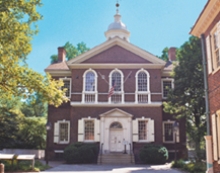
| |  Visit Web Site320 Chestnut Street 215.925.0167 | Carpenters’ Hall was built in 1770. The First Continental Congress met at Carpenters' Hall in September 1774 to draw up a Declaration of Rights and Grievances and an appeal to King George III. This was in response to the Colonies' outrage towards the British Parliament over punishing Massachusetts for the Boston Tea Party. During the Revolutionary War, Carpenters' Hall served as a hospital and an arsenal for American forces. It was here at Carpenters' Hall during the First Continental Congress that Patrick Henry stated, "The distinctions between Virginians, Pennsylvanians, New Yorkers, New Englanders are no more. I am not a Virginian but an American." |
 |
| 18. | New Hall Military Museum |
| |  Visit Web SiteChestnut Street between 3rd & 4th Streets (next to Carpenters' Hall) 215.597.8974 | The New Hall Military Museum is devoted to interpreting the role of the military in early American history. This building is a reconstruction of the one built by the Carpenters' Company in 1791, and it originally housed the office of the first Secretary of War, Henry Knox, and his staff. The building currently houses exhibits highlighting the origins of the United States Army, Marine Corps and Navy with displays featuring weapons, uniforms, battle flags and more. |
 |
| 19. | National Liberty Museum |
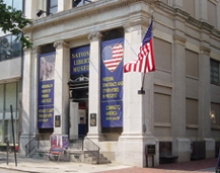
| |  Visit Web Site321 Chestnut Street 215.925.2800 | The National Liberty Museum was created to help combat America's growing problem with violence and bigotry by celebrating our nation's heritage of freedom and the wonderful diverse society it has produced. |
 |
| 20. | Franklin Court |
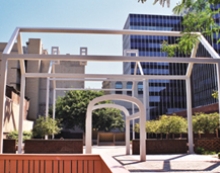
| |  Visit Web SiteBetween 3rd & 4th Streets and Chestnut & Market Streets 215.597.8974 | Benjamin Franklin, one of America's Founding Fathers, was a very accomplished author, diplomat, inventor, philanthropist, political pundit, printer, statesman and scientist during his 84-year life. Franklin's house once stood in Franklin Court, however it was razed in 1812. Today, the Robert Venturi-designed "Ghost House" stands depicting the frame of Franklin's home. Below Franklin Court is a museum which is filled with paintings, objects and inventions; the museum also continuously shows The Real Ben Franklin movie. |
 |
| 21. | B. Free Franklin Post Office & Museum |
| |  Visit Web Site316 Market Street 215.597.8974 | B. Free Franklin Post Office & Museum is the only Colonial-themed post office operated by the United States Postal Service. It is a living portrayal of a bygone Colonial lifestyle, and it is the only active post office in the United States that does not fly the American flag (because there was not yet one in 1775 when Benjamin Franklin was appointed Postmaster General). The postmark "B. Free Franklin" is still used to cancel stamps. The museum on the second floor features displays of postal history and memorabilia. |
 |
| 22. | Christ Church |
| |  Visit Web Site2nd Street above Market Street 215.922.1695 | Often called the "Nation's Church," this Episcopalian church has been an active parish since 1695, and it is where Benjamin Franklin, Absalom Jones, Robert Morris, Betsy Ross, Benjamin Rush and George Washington worshipped. It was the first parish of the Church of England (Anglican) in Pennsylvania. It is also the church where the American Episcopal Church was born. The steeple, financed by a lottery organized by Franklin, was the tallest structure in the Colonies for 83 years. |
 |
| 23. | Elfreth's Alley |
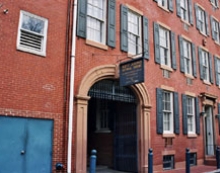
| |  Visit Web SiteOff N. 2nd Street between Arch & Race Streets (#126 is The Museum House) 215.574.0560 | Named for blacksmith Jeremiah Elfreth, Elfreth's Alley, with its 33 houses, is the oldest continuously occupied residential street in the United States, since 1713. Elfreth's Alley includes a museum about the living history of the Alley. |
 |
| 24. | Betsy Ross House |
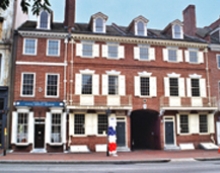
| |  Visit Web Site239 Arch Street 215.686.1252 | The Betsy Ross House, a row home built in 1740, has been restored to about the year 1777, and it commemorates Betsy Ross' legend and history. In 1777, Ross was commissioned by George Washington to create the first American Flag. Although no official records exist to prove the story of Ross creating the legendary "Stars and Stripes," the descendants of Ross have passed her story down from generation to generation, which detailed Ross' role as a national matriarch and the feminine face of the American Revolution. |
 |
| 25. | Arch Street Friends Meeting House |
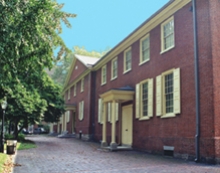
| |  Visit Web Site320 Arch Street 215.627.2667 | Built in 1804 on land that William Penn gave to the Quakers in 1693, the Arch Street Friends Meeting House is the oldest Friends Meeting House still in use in Philadelphia, and it is the largest in the world. The Society of Friends grew out of the teachings of George Fox in 17th Century England. Penn, a disciple of Fox, founded Philadelphia as a haven for his persecuted co-religionists. Penn's "Holy Experiment" was to build a society according to Quaker ideals: the absolute right of conscience, the equality of man and nonviolence. |
 |
| 26. | Christ Church Burial Ground |
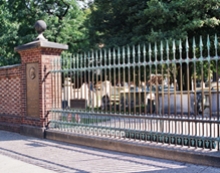
| |  Visit Web Site5th & Arch Streets 215.922.1695 | Christ Church Burial Ground is one of America's most interesting graveyards from the Colonial and Revolutionary Eras; the burial ground has 1,400 markers on two acres. The graveyard is the final resting place for some of America's most prominent leaders including Benjamin Franklin and four other signers of The Declaration of Independence. |
 |
| 27. | National Museum of American Jewish History |
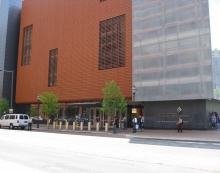
| |  Visit Web Site55 North 5th Street between Market & Arch Streets 215.923.3811 | The National Museum of American Jewish History's mission is to present educational programs and experiences that preserve, explore and celebrate the history of Jews in America. The museum's purpose is to connect Jews more closely to their heritage and to inspire in people of all backgrounds a greater appreciation for the diversity of the American Jewish experience and the freedoms to which Americans aspire. |
 |
| 28. | Congregation Mikveh Israel |
| |  Visit Web Site44 North 4th Street between Market & Arch Streets 215.922.5446 | Congregation Mikveh Israel was founded 1740, and it is the second oldest synagogue in the United States. Notable members from the Colonial and Revolutionary Eras included: Haym Solomon, one of the financiers of the American Revolution; Nathan Levy, whose ship, the Myrtilla, transported the Liberty Bell to America; and Rebecca Gratz, philanthropist and founder of the first Hebrew Sunday School. |
 |
| 29. | The Bourse Building |
| |  Visit Web Site111 S. Independence Mall East on 5th Street between Market & Chestnut Sts. 215.625.0300 | The Bourse Building, opened in 1895, was the first Commodities Exchange in the United States. The Bourse Building was the first in the world to simultaneously house a stock exchange, maritime exchange and grain-trading center. Be sure to visit The Bourse's souvenir shops and food court, which serves everything from cappuccino to world-famous Philadelphia cheesesteaks. |
 |
| 30. | Lights of Liberty & Signers' Walk |
| |  Visit Web SiteChestnut Street between 6th & 7th Streets 877.GO.2.1776 | Lights of Liberty is a nighttime sound and light walking show that lets you experience the American Revolution with image projections up to 5 stories high. The show is offered from May through October.
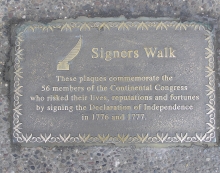
Signers' Walk provides a tribute to 56 members of the Continental Congress who risked their lives, reputations and fortunes by signing The Declaration of Independence. |
 |
| 31. | Atwater Kent Museum |
| |  Visit Web Site15 South 7th Street between Chestnut & Market Streets 215.685.4830 | The Atwater Kent Museum is Philadelphia's official history museum which tells Philadelphia's 300-year story. The museum features a collection of more than 80,000 objects as well as exhibits, educational programs and family activities. |
 |
| 32. | Declaration House (Graff House) |
| |  Visit Web Site7th & Market Streets 215.597.8974 | Declaration House, or Graff House as it is also referred to, is on the site where Thomas Jefferson lived when he wrote The Declaration of Independence, appealing to the natural principles of justice and equality. Be sure to request to watch the free 10 minute movie entitled Portrait of a Patriot which tells the story of Jefferson and the writing of The Declaration of Independence. |
 |
| 33. | The African American Museum in Philadelphia |
| |  Visit Web Site701 Arch Street 215.574.0380 | Founded in 1976, The African American Museum in Philadelphia is dedicated to collecting, preserving and interpreting the material and intellectual culture of African Americans in Philadelphia, the Delaware Valley, the Commonwealth of Pennsylvania and the Americas. The Museum is also a proud affiliate of the Smithsonian Institution. |
STEPS OFF THE TOUR
While you are taking The Constitutional Walking Tour
of Philadelphia, be sure to see the many other exciting
sites that are just "Steps off The Tour" including: |
| A. | Walnut Street Theatre |
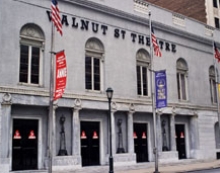
| |  Visit Web Site825 Walnut Street 215.574.3550 | Founded in 1809, the Walnut Street Theatre is the oldest theatre in America and the oldest playhouse in continuous use in the English-speaking world. |
 |
| B1. | Pennsylvania Hospital |
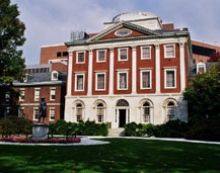
| |  Visit Web SitePrimarily bounded by 8th & 9th Streets and Spruce & Pine Streets 215.829.5434 | Founded in 1751 by Benjamin Franklin, Pennsylvania Hospital is the first hospital in America. The first building that was erected in 1755 is still in use today. The best view of the original building is from Pine Street between 8th & 9th Streets. |
 |
| B2. | Mikveh Israel Cemetery |
| |  Visit Web SiteSpruce Street between 8th & 9th Streets 215.922.5446 | Founded in 1740, Mikveh Israel Cemetery is the first Jewish cemetery in the nation. Many members of the Mikveh Israel congregation from the Colonial and Revolutionary Eras are buried here, including Haym Solomon, one of the major financiers of the American Revolution, as well as Nathan Levy, Aaron Levy and the Gratz family. |
 |
| C. | Mother Bethel African Methodist Episcopal (AME) Church |
| |  Visit Web Site419 South 6th Street between Pine & Lombard Streets 215.925.0616 | Founded in 1791 by Richard Allen, Mother Bethel is the "mother church" of the African Methodist Episcopal Church in America. Mother Bethel Church was a stop on the Underground Railroad. The ground on which Mother Bethel stands is the oldest parcel of real estate continuously owned by African Americans in the United States. The original structure was built in 1791, and the current structure was built in 1889. |
 |
| D1. | Old St. Mary's Church |
| |  Visit Web Site252 South 4th Street between Locust & Spruce Streets 215.923.7930 | Built in 1763, Old St. Mary's became the first Catholic Cathedral of the Diocese of Philadelphia in 1810. George Washington, John Adams and other members of the Continental Congress attended services at Old St. Mary's Church. John Barry, "Father of the American Navy," is buried here. |
 |
| D2. | James Madison House |
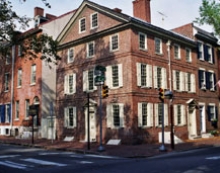
| |  429 Spruce Street - Private Residence - Not Open to the Public | Built in 1796, James Madison lived here with his wife Dolley. |
 |
| D3. | Old Pine St. Church |
| |  Visit Web Site412 Pine Street 215.925.8051 | Built in 1768, this is the only Colonial Presbyterian church in Philadelphia which is still standing and in continuous use. This church was often referred to as the "Church of the Patriots." |
 |
| D4. | St. Peter's Church |
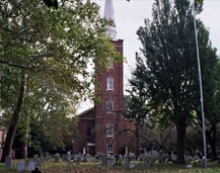
| |  Visit Web Site3rd & Pine Streets 215.925.5968 | A National Historic Landmark, this Colonial Era building has changed little since the day it opened for worship in September 1761. The steeple was designed by William Strickland who was known as the "city architect" because he created a large number of Philadelphia's public buildings. |
 |
| D5. | Thaddeus Kosciuszko National Memorial |
| |  Visit Web Site301 Pine Street 215.597.9618 | Thaddeus Kosciuszko, a military engineer, became one of the 18th Century's greatest champions of American and Polish freedom. The house where he resided during the winter of 1797/98 serves as a memorial to his life and accomplishments. |
 |
| E. | Old St. Joseph's Church |
| |  Visit Web Site321 Willings Alley 215.923.1733 | Founded in 1733, Old St. Joseph's Church is the oldest Roman Catholic Church in Philadelphia. |
 |
| F. | Powel House |
| |  Visit Web Site244 South 3rd Street between Walnut & Spruce Streets 215.627.0364 | Built in 1765, the Powel House was the home of Samuel Powel who served as the last Mayor of Philadelphia under the British Crown. Powel was also the first Mayor of Philadelphia after the creation of the United States. Powel and his wife frequently entertained notable guests such as John Adams, Benjamin Franklin and George Washington. |
 |
| G. | Independence Seaport Museum |
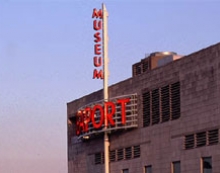
| |  Visit Web Site211 South Columbus Boulevard at Walnut Street 215.925.5439 | Capture Philadelphia's maritime heritage with family-oriented interactive exhibits, ship models, artifacts and art. The National Maritime Historical Society proclaimed the Independence Seaport Museum to be "Both a Celebration and an Experience." |
 |
| H. | Chemical Heritage Foundation |
| |  Visit Web Site315 Chestnut Street 215.925.2222 | The Chemical Heritage Foundation is dedicated to preserving and sharing the history and heritage of the chemical and molecular sciences, technologies and allied industries. The Chemical Heritage Foundation is housed in the First National Bank building built in 1865. |
 |
| I. | Fireman's Hall Museum |
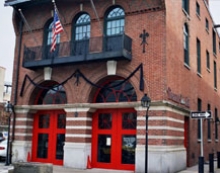
| |  Visit Web Site147 North 2nd Street between Arch & Race Streets 215.923.1438 | Containing firefighting apparatus from 1731 to 1907, including early hand-drawn and horse-drawn engines, Fireman's Hall Museum is dedicated to the art and science of firefighting through the last three centuries. Fireman's Hall is located on the site of the former Engine Company Number Eight, a descendant of Benjamin Franklin's 1736 "Union Fire Company." |
 |
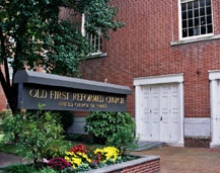
| J. | Old First Reformed Church |
| |  Visit Web Site151 North 4th Street at the corner of Race Street 215.922.4566 | One of the earliest German Reformed Churches in America, Philadelphia's Old First Reformed Church was established by Reverend George Michael Weiss and predates The Declaration of Independence by nearly 50 years. |
 |
| K. | St. George's United Methodist Church |
| |  Visit Web Site235 North 4th Street on the corner of New & 4th Streets between Race & Vine Streets 215.925.7788 | St. George's United Methodist Church is America's oldest Methodist church building in continuous service since 1769. |
 |
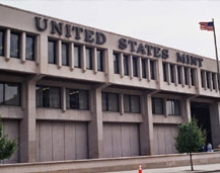
| L. | The United States Mint |
| |  Visit Web Site151 North Independence Mall East at 5th & Arch Streets 215.408.0112 | In 1792, Congress passed The Coinage Act, which created the Mint and authorized construction of the first Mint in the nation's capital, Philadelphia. The Mint in Philadelphia has since moved three times in order to expand. Today, the Mint in Philadelphia is one of five facilities nationwide, and it is the home of engraving for United States coins and medals. Every day, the Philadelphia and Denver facilities mint 65 to 80 million coins.
Notes: Tours of students and youth groups (grades kindergarten through 12), and organized military and veteran groups may be arranged through the Office of Exhibits and Public Services at the Philadelphia Mint at 215.408.0112, by appointment only. Two weeks advance notice is required for scheduling and security purposes. Tours for groups of six or fewer citizens at a time may be arranged through Congressional sponsorship. Contact your Senator or your Representative.
Please note that two weeks advance notice is required for scheduling and security purposes. |
 |
| M. | Federal Reserve Bank of Philadelphia |
| |  Visit Web SiteTen Independence Mall at 6th & Arch Streets 215.574.3930 | Visit the new exhibit, Money in Motion, where visitors learn about money, banking and the Federal Reserve System. This free exhibit highlights Philadelphia's role as the city where banking was born. View money from the original 13 Colonies and examine a rare $100,000 bill. |