
The First Bank of the United States Museum
Related Posts
- Buy Tickets for The Constitutional Walking Tour of Philadelphia – See 20+ Sites on a Primary Overview of Independence Park, including the Liberty Bell and Independence Hall
- Alexander Hamilton - One of America's Founding Fathers
- Alexander Hamilton: The Constitutional Clashes That Shaped a Nation Exhibit
- Alexander Hamilton in Philadelphia
- The First Bank: Centerpiece of Hamilton’s “Cabinet Battle #1”
- The First Bank of the United States
The first government building ever built by the United States is becoming a brand new Philadelphia museum.
History of the First Bank
The First Bank of the United States was proposed by America’s first Secretary of the Treasury, Alexander Hamilton, in 1790. The proposal immediately ignited a controversy over the interpretation of the United States Constitution that is considered the country's first great Constitutional debate.
Thomas Jefferson, America’s first Secretary of State, was among the harshest critiques of Hamilton’s banking plan and argued that the creation of a central federal bank was not one of the enumerated powers in the Constitution. Hamilton countered that Congress was empowered by Article 1, Section 8 of the Constitution to pass laws that were “necessary and proper” to carry out their enumerated powers. Hamilton was able to convince President George Washington to support his banking plan which was subsequently passed by Congress and signed into law by Washington in 1791.
Hamilton’s fight to create the First Bank was famously immortalized in the musical Hamilton: An American Musical.
The First Bank of the United States was immensely important in early America. Federal tax dollars were invested in the bank and the bank became a major source of credit and helped to stabilize the economy and eventually helped America introduce its own currency.
Congress approved a 20-year charter for the bank which ran until 1811. Political fighting prevented its renewal in 1811 and The First Bank was subsequently allowed to close. Just five years later though, the Second Bank of the United States was chartered and modeled largely on Hamilton’s Bank.
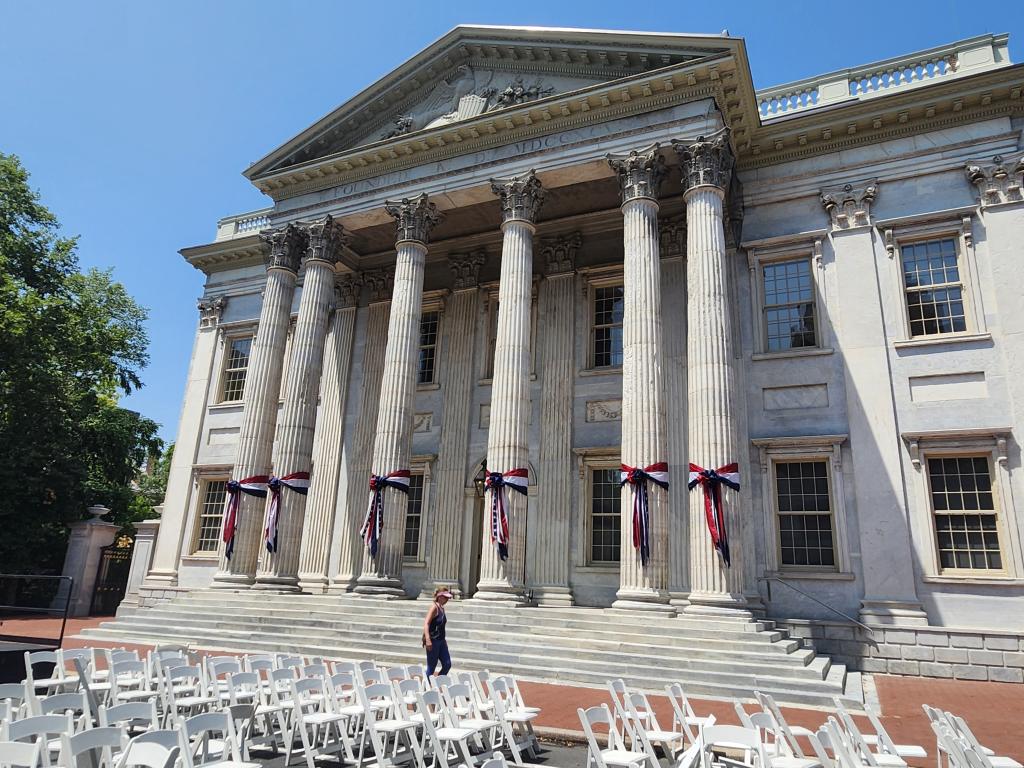
The First Bank of the United States building
The First Bank of the United States initially operated in Carpenter’s Hall when it was established in 1791 but by 1793 plans were coming together for a grand new building to be constructed nearby on Third Street. This new building was a major step for the fledgling American government; it was to be the first building to be purposely constructed for the use of the federal government.
The building was designed by Samuel Blodgett, Jr. a gentleman architect with the assistance of James Hoban, the architect of the White House. The style represents an architectural period of transition as three sides of the building are faced in brick in a classic Georgian style. The front of the building however is pure Greek Revival with a two-story portico supported by high stone columns and a pediment that features the first depiction of an American Eagle on a public building in the United States.
The building housed the First Bank until the expiration of its Charter in 1811. The building was subsequently sold to Stephen Girard who opened Girard Bank, which continued to operate inside the building for over a century until 1929. During that time, the interior of the building was extensively remodeled in 1902.
After the closure of Girard Bank, numerous organizations used the building until the National Park Service purchased the building in 1955 as part of the creation of Independence National Historical Park. The building has been used for park offices and storage but has been closed to the public… until now.
The First Bank of the United States Museum
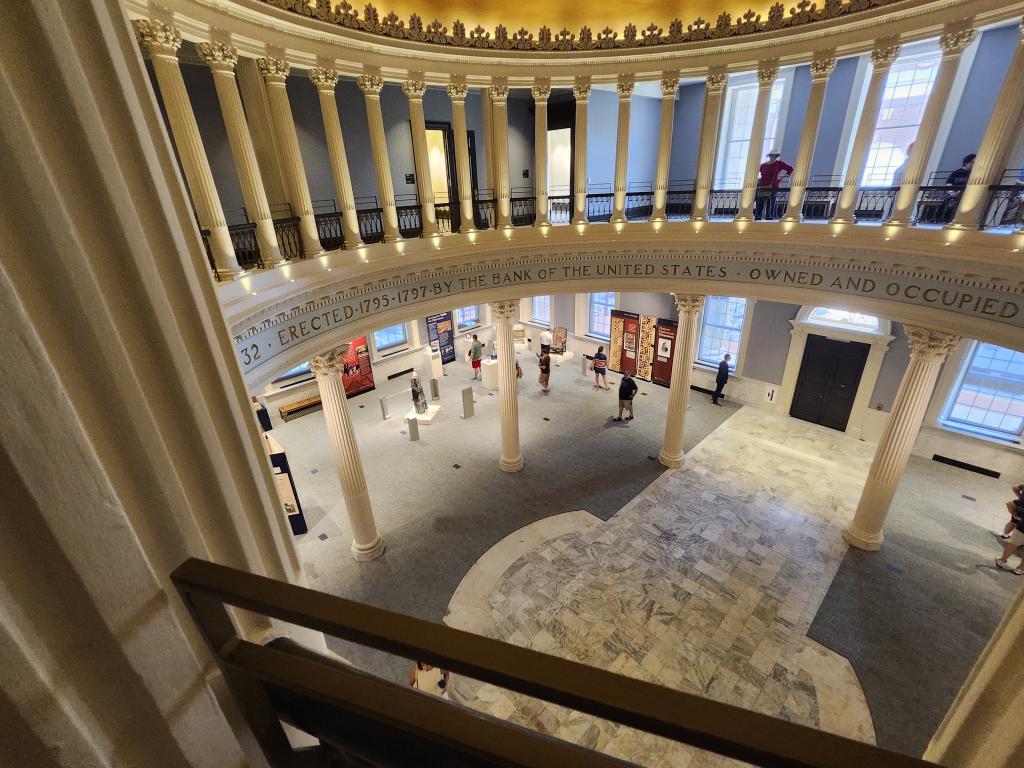
Over the past few years significant work has been undertaken to prepare this 200+ year old building for the public. The exterior remains nearly entirely original and is restored to its 1797 grandeur. However, because the interior of the building was so completely reshaped in the 1902 renovation there was no effort to attempt to restore the original interior of the building. Instead, the 1902 interior, which itself is now over a century old, has been faithfully restored to how it looked when the Girard Bank still occupied the building.
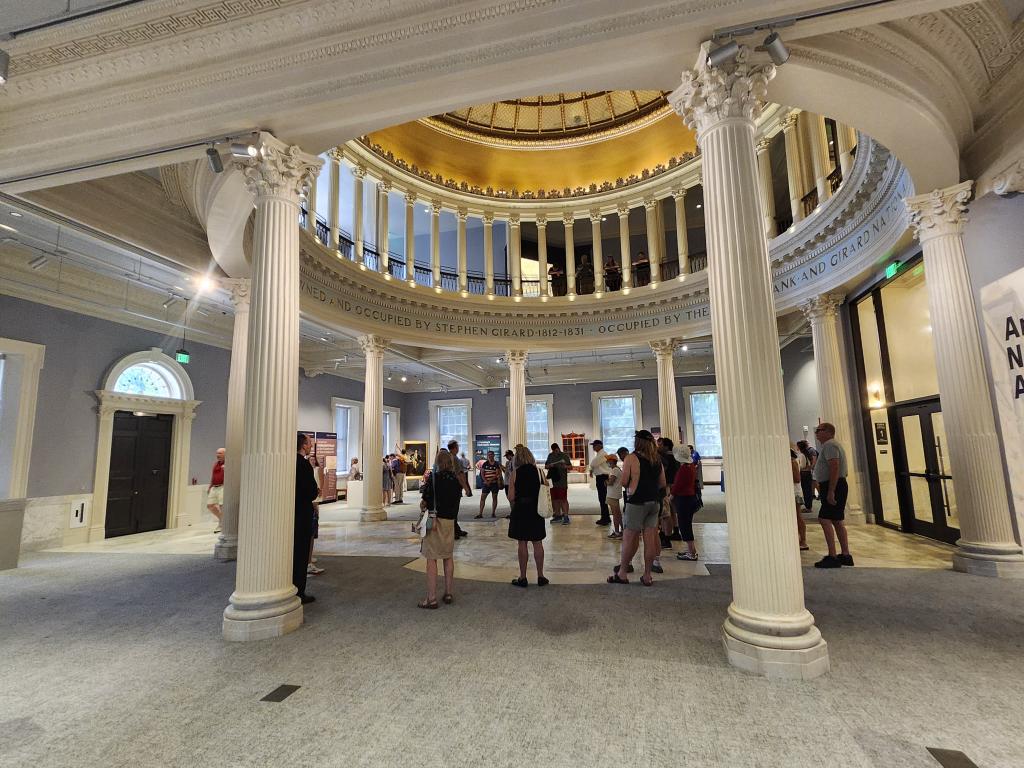
In the rear of the building a small addition has been added to the building to add modern restrooms, elevators and other facilities. The addition was purposely designed to make use of existing doorways and windows, allowing the original exterior of the building to remain undisturbed.
In time, a new permanent exhibit will be established in the museum which will delve into the history of the First Bank of the United States and the early history of America’s financial system. While the permanent exhibit is being developed, the First Bank of the United States is currently hosting two temporary exhibits.
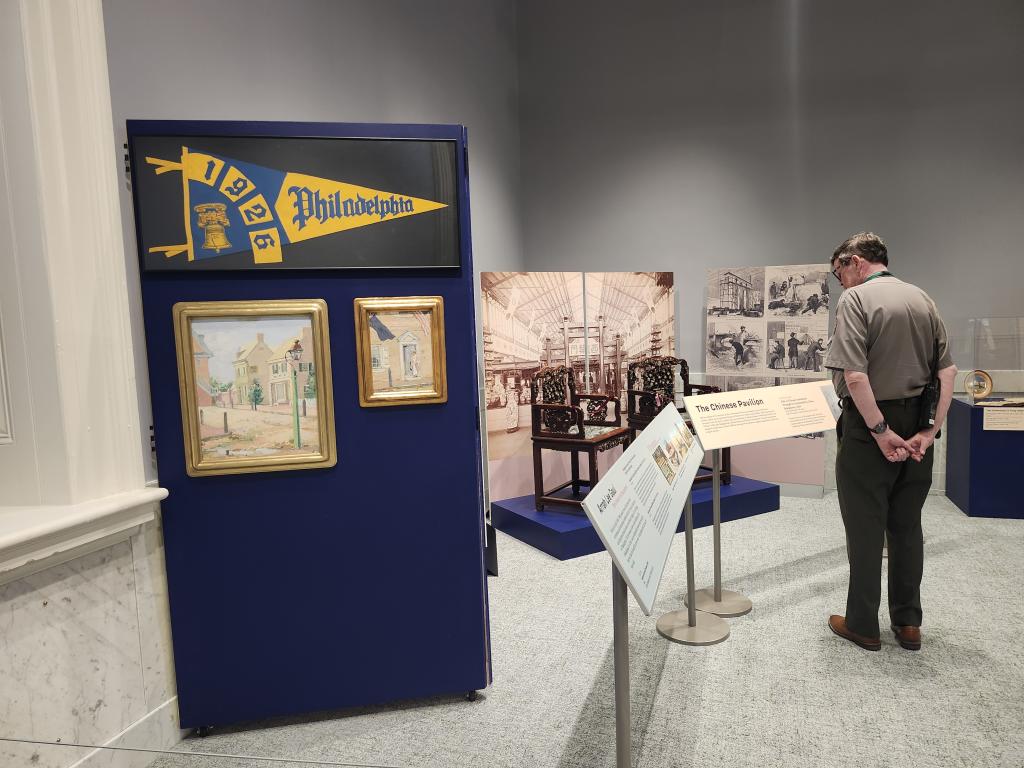
The first exhibit, titled “America’s National Anniversaries: Philadelphia on the World Stage” pays homage to the fact that the First Bank was reopened as part of the celebration for America’s 250th birthday and displays artifacts from previous anniversary celebrations. Artifacts and information on America’s Centennial in 1876, Sesquicentennial in 1926 and Bicentennial in 1976 are on display.
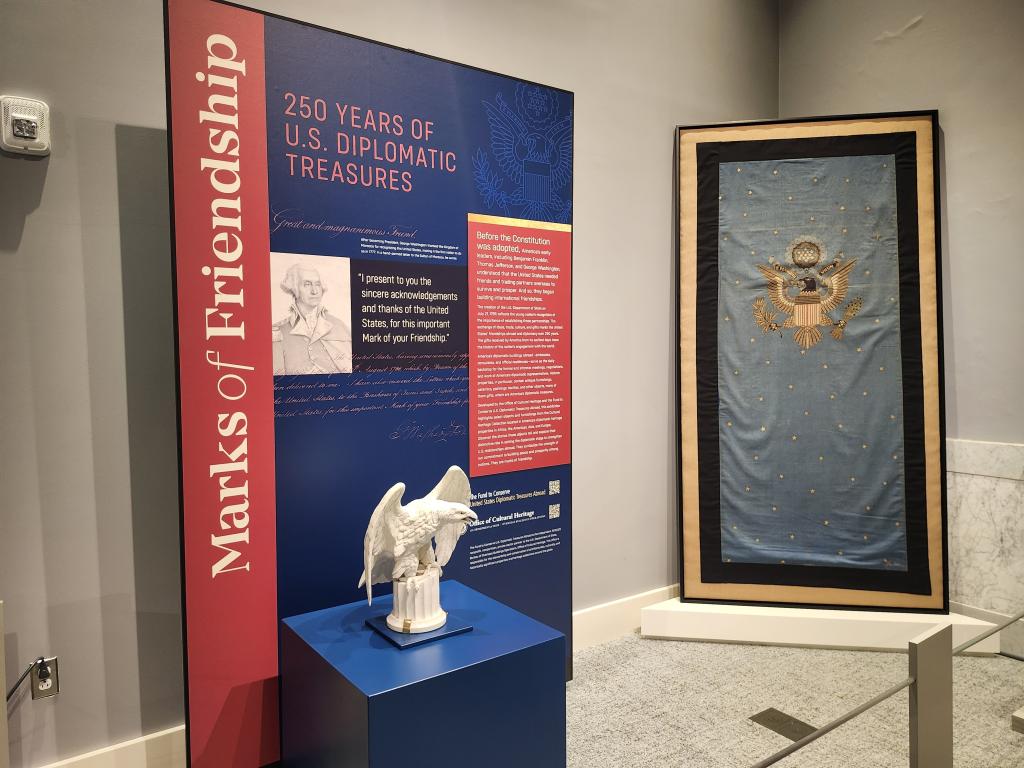
The second exhibit is titled "Marks of Friendship: 250 of U.S. Diplomatic Treasures” and includes items from U.S. embassies from across the globe. These rare items are on loan from United States Department of State.
Both temporary exhibits are scheduled to remain on display until February of 2027 when it is expected that the new permanent exhibit will be installed.
How to Get There
The First Bank of the United States is located within Independence National Historical Park on 3rd Street below Chestnut Street. Guests of the Constitutional Walking Tour will see this site as part of our tour. The First Bank of the United States is also easily accessible by the Market-Frankford Line via 2nd Street Station which is only two blocks away.
Hours
Thursday – Sunday: 11AM – 4PM
Monday – Wednesday: Closed
Additional Information
The First Bank of the United States
120 South Third Street
Philadelphia, PA 19106
215-861-4971
firstbankphilly.com